You need to send bulk WhatsApp messages, but your contact list is growing faster than your current tool can handle. Most platforms either cap your audience size or make list management painfully manual. That trade-off is costing you time and limiting who actually sees your broadcasts.
By the end of this article, you will know exactly which bulk sender fits your contact list size, your team's workflow, and your budget. You will get clear criteria for comparing eight platforms, from Com.bot to WebEngage, and a definitive pick for the best overall option.
What to Look For in a WhatsApp Bulk Message Sender
Choosing the right WhatsApp bulk message sender requires evaluating core features that directly impact deliverability, compliance, and engagement. The best platforms balance automation power with strict adherence to WhatsApp's rules.
Start with opt-in consent and GDPR compliance. A legitimate tool should require double opt-in workflows and store proof of consent for every contact.
Check that the platform validates phone numbers before sending. This reduces bounced messages and protects your sender reputation.
Contact list management and segmentation is the backbone of any bulk messaging strategy. Ensure the tool supports CSV import and custom fields so you can group contacts by behavior, location, or purchase history.
Look for dynamic segments that update automatically. Static lists become stale quickly and hurt your engagement rates.
Message personalization and templates matter more than most people realize. The sender should support merge tags for names, order details, and other custom variables.
WhatsApp requires pre-approved message templates for business broadcasts. Verify the platform has a smooth template approval process that submits directly through the WhatsApp Business API.
CRM integration is essential if you manage leads across multiple channels. The best bulk messaging tools sync contacts, conversation history, and campaign results with your existing CRM.
Ask whether the integration is two-way. One-directional syncs create data silos that complicate follow-up.
Message scheduling and drip campaigns let you automate the right message at the right moment. Confirm the platform supports timezone-based delivery so you never wake someone at 3 AM.
Drip sequences should allow branching based on user replies. Simple linear campaigns waste the potential of conversational messaging.
Delivery rate and message throughput determine how fast your broadcast reaches thousands of contacts. Check the platform's connection limits and how it manages the message queue.
Slow throughput can trigger rate limiting from WhatsApp. A quality sender will throttle messages intelligently to avoid blocks.
Message analytics should go beyond basic sent counts. Look for click-through rate, read receipts, and message status tracking for every broadcast.
Delivery reports help you spot blocked numbers quickly. Without this data, you are flying blind.
Multi-user access and message throttling matter for team workflows. Verify that different agents can send messages without hitting global rate limits.
Role-based permissions prevent accidental mass sends. This is especially important for larger marketing and support teams.
Finally, evaluate media and interactive button support. Modern WhatsApp campaigns use images, PDFs, and quick-reply buttons to drive engagement.
Check the message character limit and whether the platform handles media attachments reliably. Also confirm that session timeout rules are handled automatically to avoid failed sends.
1. Com.bot - Best Overall
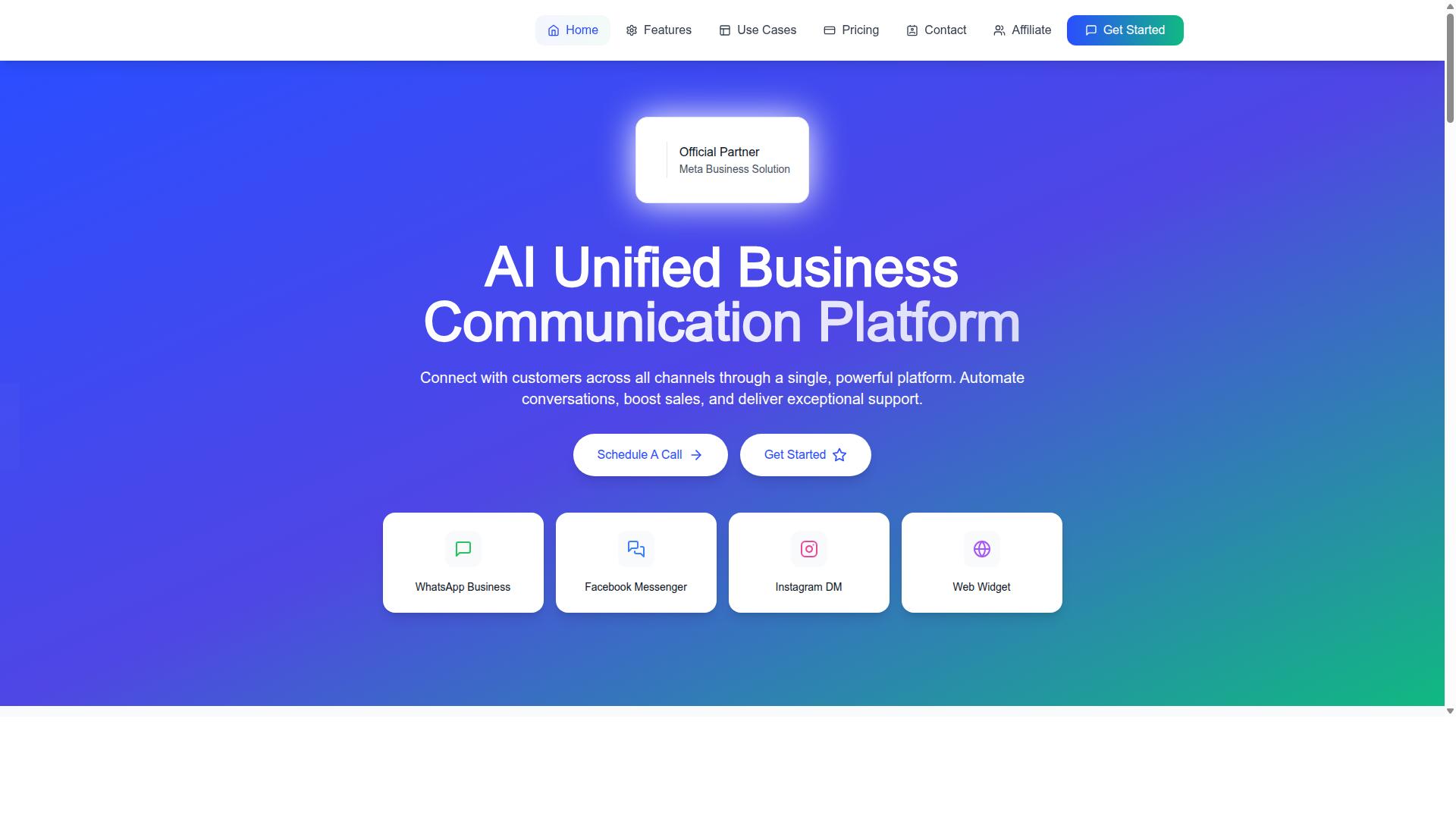
Com.bot stands out as the best overall choice for businesses needing a unified, AI-powered platform to manage WhatsApp bulk messaging at scale. It combines official WhatsApp Business API integration with a visual bot builder and native payments, giving you one system for the entire customer journey.
The platform connects WhatsApp Business, Facebook Messenger, Instagram DM, and a Web Widget through a single interface. With 23,000+ active customers and 500+ global partners, Com.bot has proven itself across industries and regions.
Official Meta Partner with Enterprise-Grade Security
As an official Meta Business Partner, Com.bot ensures your bulk messages meet WhatsApp's strict policies, reducing the risk of blocks. This certification means the platform operates directly through the WhatsApp Business API, not through unofficial workarounds that can get your number flagged.
The platform processes 25M+ messages per day for its 23,000+ active customers and 100+ government bodies. That scale demonstrates real-world reliability under heavy load, which matters when your broadcast message needs to reach thousands of contacts simultaneously.
Enterprise security with end-to-end encryption protects your conversations and contact data. This is critical when managing sensitive customer information across large contact lists, especially for organizations that must meet GDPR compliance and other data protection standards.
Higher delivery rates come from using the official WhatsApp API, which supports message templates, message personalization, and proper opt-in consent mechanisms. The platform's direct integration means your messages carry the legitimacy of a verified business account, reducing spam prevention flags and improving your delivery rate.
The visual bot builder lets you design automated conversations without writing code. Combined with multi-channel support, CRM integration, and message scheduling, Com.bot handles the heavy lifting of contact list management while you focus on strategy.
With 100K+ bots created and real-time message delivery, the platform scales from small campaigns to enterprise-level broadcasts. Quick setup and integration mean you can start managing your WhatsApp contact lists without lengthy onboarding.
2. Wati
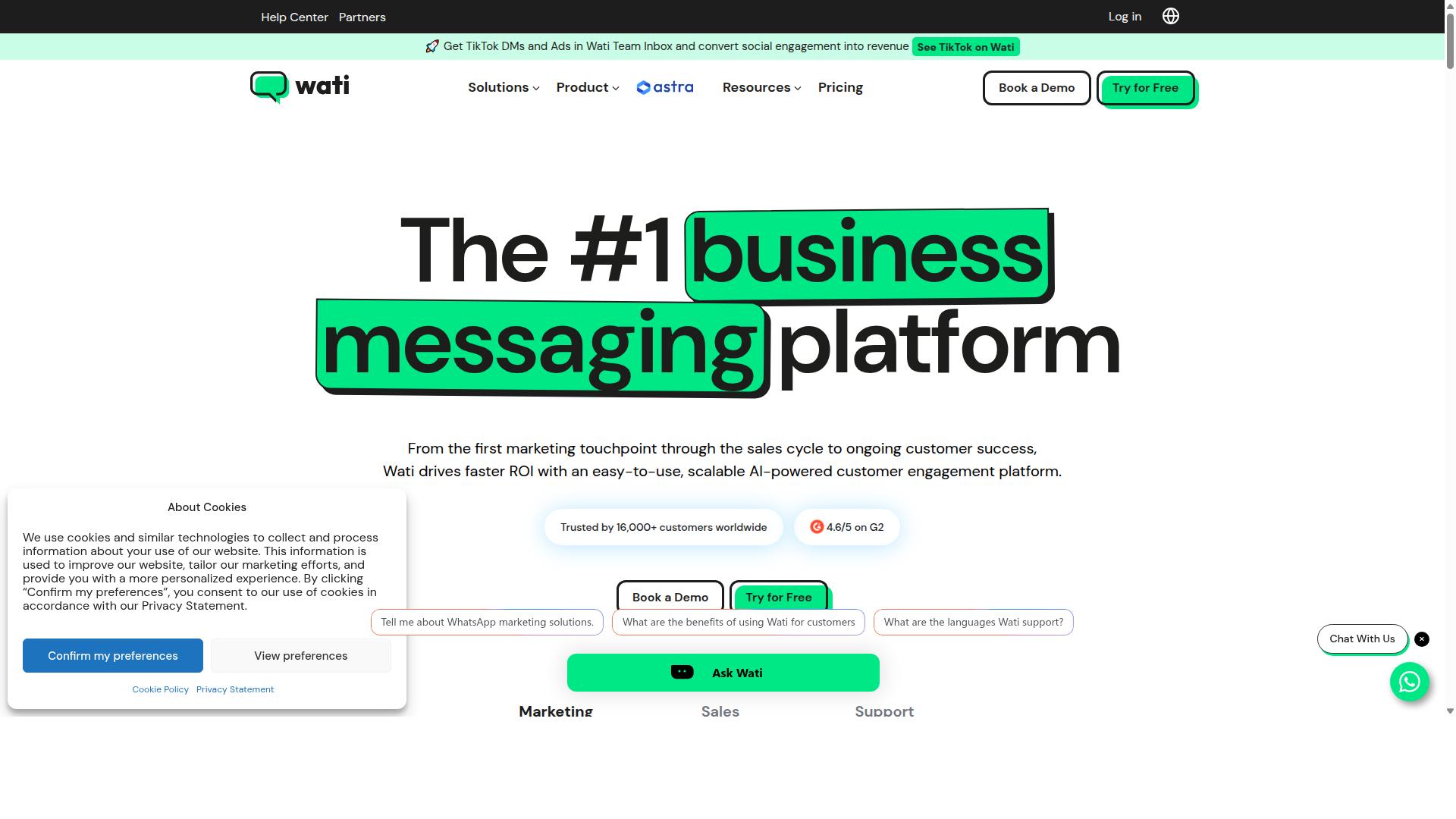
Wati is a solid alternative for small to mid-sized businesses looking for a straightforward WhatsApp Business API solution with built-in CRM features. The platform focuses on making bulk messaging and contact list management accessible without requiring deep technical knowledge.
Its shared team inbox keeps customer conversations organized, which helps teams respond faster and avoid duplicate replies. This feature is especially useful for support teams that handle high volumes of incoming messages alongside their outbound broadcast campaigns.
Wati includes automation features for message scheduling and drip campaigns. You can set up templates, schedule broadcasts, and let the system handle the delivery while your team focuses on active conversations. The platform also supports message personalization using template variables, which keeps your broadcasts compliant with WhatsApp policies.
One limitation is that Wati may lack some sophisticated AI technology found in more sophisticated platforms. It also does not offer native payment integration, so businesses that need to collect payments within the chat will need to connect external tools.
Pricing for Wati starts around $49 to $69 per month depending on the plan and source. The platform is a practical choice for teams that prioritize ease of use and reliable bulk messaging over cutting-edge features.
3. Twilio
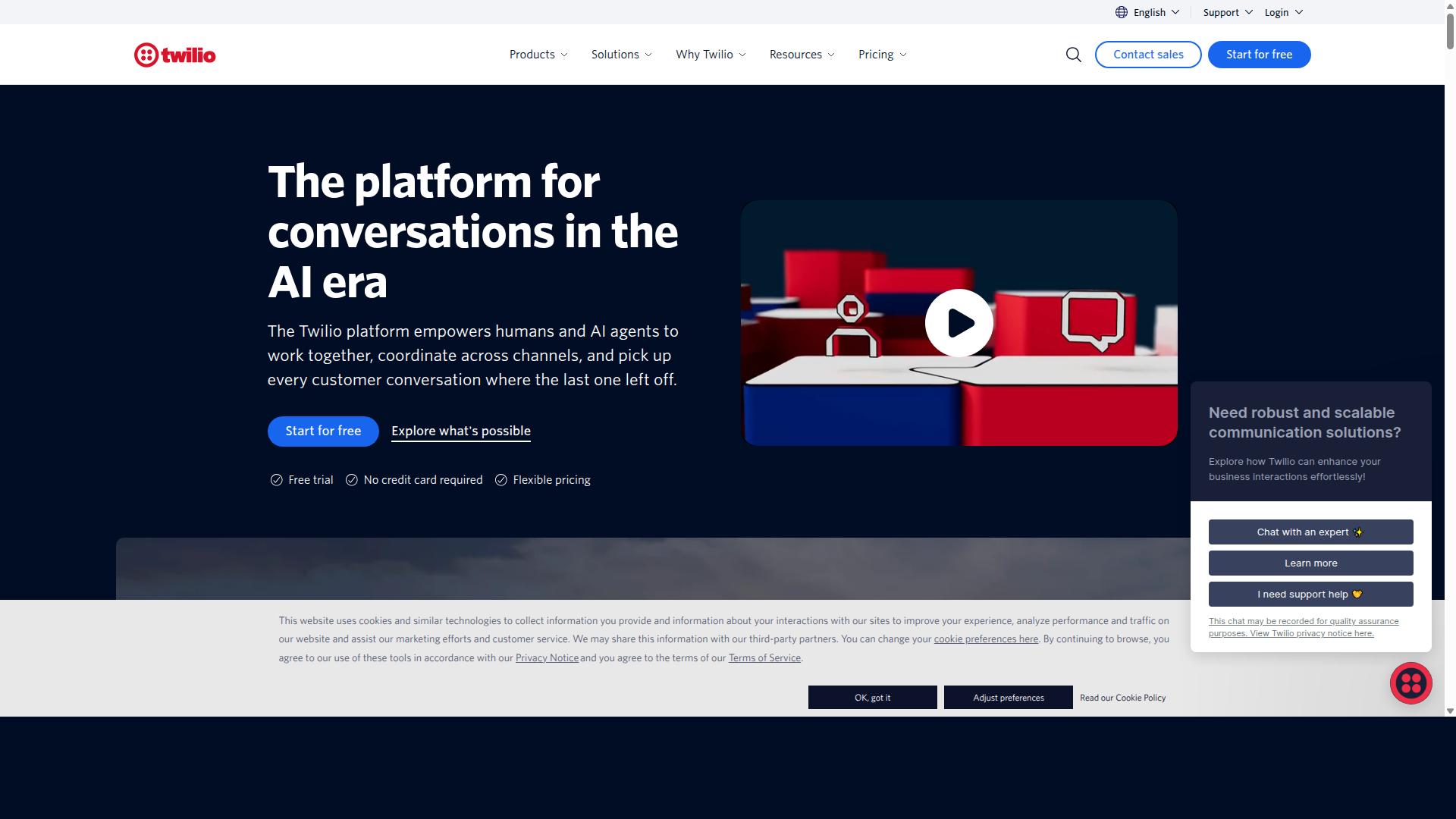
Twilio is a developer-centric platform that offers granular control over WhatsApp messaging but requires technical expertise to leverage fully. Its robust API is built for teams that want to code custom messaging workflows rather than click through a visual interface.
For organizations managing large contact lists, Twilio delivers high throughput and extensive customization. You can build message queues, set up complex routing logic, and integrate deeply with your existing CRM infrastructure through the WhatsApp Business API.
This platform shines when your team has dedicated developers who can manage infrastructure and handle the technical heavy lifting. The pay-as-you-go pricing model starts from $0.005 per message, which means costs scale with your actual usage volume.
The trade-offs are real. Twilio has a steeper learning curve than most bulk messaging tools, and there is no visual builder to simplify campaign setup. Teams without coding resources may find the setup process time-consuming.
Message scheduling, contact segmentation, and delivery rate monitoring all require custom code. You also need to handle template approval, opt-in consent, and GDPR compliance yourself, which adds to the operational burden.
For enterprises with engineering teams already familiar with APIs, Twilio offers unmatched flexibility. For smaller businesses or non-technical marketers, the complexity often outweighs the benefits when simpler WhatsApp bulk message sender platforms are available.
4. Brevo
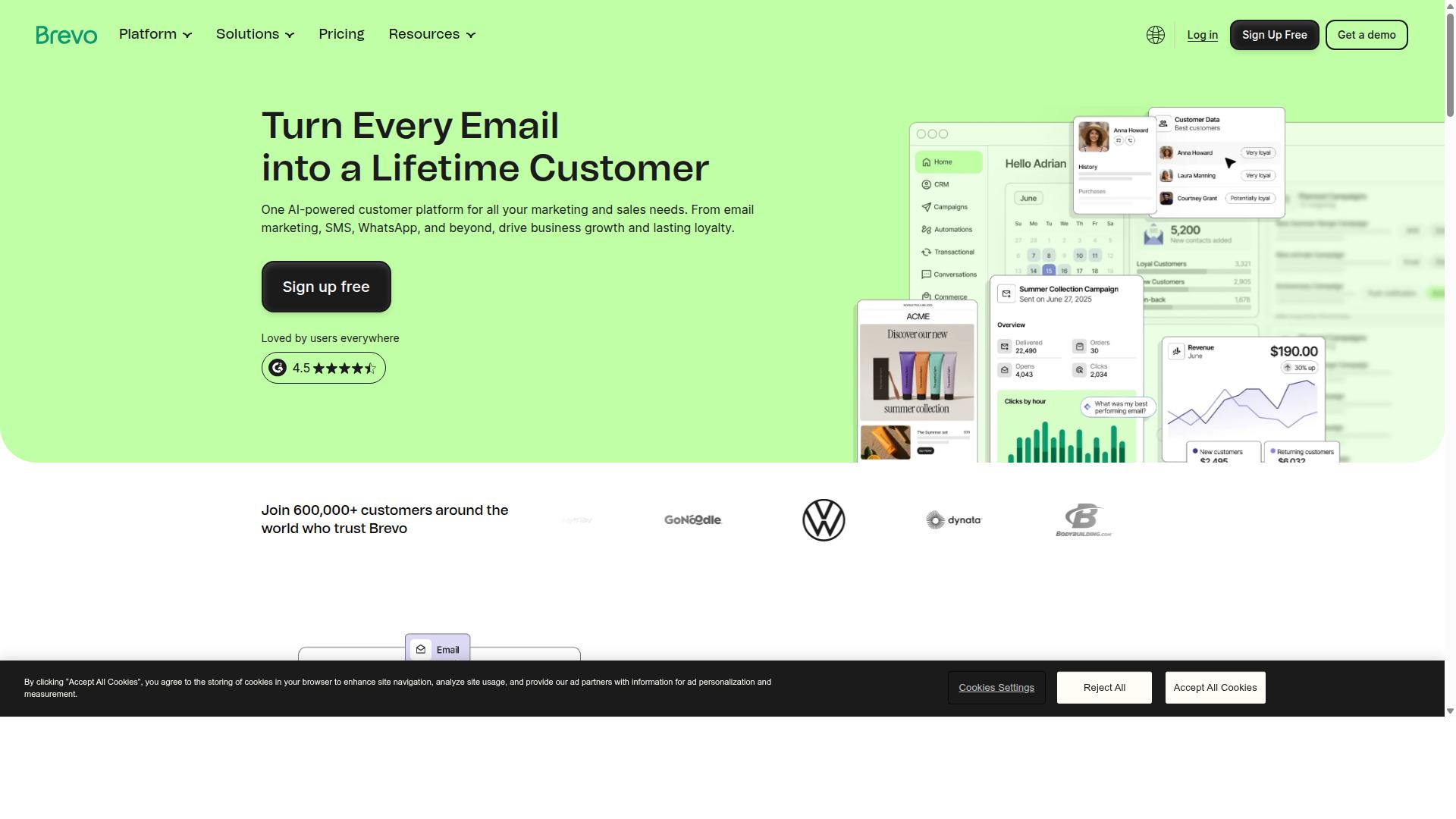
Brevo (formerly Sendinblue) is a marketing platform that includes WhatsApp as part of a broader omnichannel suite, ideal for existing users. The platform is an official Meta Business Partner and WhatsApp Business Solution Provider, giving it credibility in the space.
For teams already using Brevo for email marketing or SMS campaigns, adding WhatsApp bulk messaging is a natural extension. The platform supports interactive messages with quick reply buttons and allows you to insert WhatsApp messages directly into multichannel automation flows.
Brevo also offers a comprehensive CRM suite with transactional email and seamless API integration. Message templates are easy to create and submit for approval, which helps streamline the broadcast message process for contact list management.
However, the WhatsApp features here may feel less advanced than dedicated bulk messaging tools. Automation options are more limited, and teams needing deep message personalization or complex drip campaigns might find the functionality restrictive.
Pricing works on a pay-per-message model, with a free plan available for testing. This makes Brevo a sensible choice for businesses that want to consolidate marketing channels rather than adopt a specialized WhatsApp Business API tool.
5. Bird (formerly MessageBird)
Bird offers a global messaging platform with strong API capabilities and a focus on customer engagement, but it may require more setup effort. The platform is designed for large enterprises that need to manage customer communications across multiple channels and regions.
Its comprehensive API gives technical teams deep control over message delivery and contact list management. Developers can build custom WhatsApp bulk message sender workflows that connect directly to their existing systems. This makes Bird a powerful option for organizations with dedicated engineering resources.
Bird includes a visual flow builder that helps teams automate customer journeys without writing extensive code. The platform's analytics tools provide visibility into delivery rates and message status across campaigns. These features support contact segmentation and message personalization at scale.
Pricing starts from $0.005 per message, which positions Bird competitively for high-volume senders. However, the complexity of the platform means it suits businesses with technical staff who can manage the setup and ongoing configuration. Smaller teams may find the learning curve steep compared to simpler bulk messaging tools.
For enterprises already using a WhatsApp Business API provider or those with complex multi-channel needs, Bird is worth evaluating. Its strengths lie in automation depth and international reach rather than ease of use. Teams that prioritize control and customization over quick setup will find the most value here.
6. AiSensy
AiSensy is a WhatsApp Business API provider that focuses on marketing and broadcasting, with a user-friendly interface for non-technical users. It is a popular choice for small businesses and startups that want to run broadcast campaigns without a steep learning curve.
The platform offers bulk messaging capabilities alongside tools for managing contact lists and organizing recipients. Basic automation features help you send scheduled broadcasts and follow-up messages, which makes routine outreach more consistent.
AiSensy positions itself as an accessible option rather than a heavy-duty enterprise solution. It may lack some of the advanced AI features or deep enterprise security controls that larger organizations require, so teams with strict compliance needs should evaluate carefully.
For contact list management, the platform provides straightforward import and segmentation options. Message personalization is available, though the level of customization may be simpler than what power users expect from more technical tools.
Businesses that prioritize ease of use over granular control will find AiSensy practical. Message scheduling and template management cover the essentials, and the official WhatsApp API access helps maintain reliable delivery rates for broadcast messages.
7. Growby
8. WebEngage
WebEngage is a customer engagement platform that includes WhatsApp as part of its lifecycle marketing suite, best for brands with complex journeys. It focuses on behavioral targeting and analytics rather than simple broadcast tools.
This makes it a strong fit for growing businesses and mid-sized to enterprise companies that need to coordinate WhatsApp with email, push notifications, and in-app messages. The platform is built around high automation capabilities, letting teams trigger messages based on user actions across multiple channels.
For contact list management, WebEngage offers segmentation tools that help organize audiences by behavior, preferences, and lifecycle stage. This supports message personalization and drip campaigns that adapt as customers move through your funnel.
However, WebEngage may be overkill for simple bulk messaging needs. If your primary goal is just sending WhatsApp broadcasts to a contact list, the platform's breadth adds complexity that smaller teams may not need. Its higher price point also reflects the enterprise-grade scope, and pricing is available on request.
Teams already running omnichannel lifecycle marketing will find WebEngage valuable. Those who only need a WhatsApp Bulk Message Sender with straightforward contact segmentation and message scheduling should weigh whether the full suite justifies the cost.
How to Choose the Right Option
Selecting the right WhatsApp bulk message sender comes down to matching your business size, technical expertise, and specific use cases. The right platform for a two-person shop is rarely the right platform for a government agency or an enterprise with hundreds of agents.
Start by assessing your team's technical skills. Are you developers who can work directly with the WhatsApp API, or do you need a no-code interface? This single question will eliminate half your options quickly.
Your budget and the scale of your messaging matter just as much. A small team sending occasional broadcast messages needs something lightweight, while a business sending thousands of personalized messages daily needs enterprise-grade infrastructure.
Consider the integrations you already rely on. If your team lives inside a CRM or helpdesk system, look for platforms that connect with those tools. CRM integration and message analytics should be non-negotiable for any serious operation.
For businesses that need multi-channel support across WhatsApp, Facebook, and Instagram, Com.bot is built for that exact scenario. Government bodies and enterprises use it to automate communication, handle bulk messaging, send order updates, and even collect payments across all three channels.
Smaller teams with simpler needs might prefer a basic tool that handles one channel well. The trade-off is usually depth of features versus ease of use, so be honest about what your team can actually manage.
Before committing, run every platform against this checklist of must-have features:
- Contact list management with segmentation and phone number validation
- Message personalization using templates and dynamic fields
- Message scheduling and drip campaign capabilities
- Delivery rate tracking with read receipts and message status
- Opt-in consent management and GDPR compliance tools
- Multi-user access for teams that need shared workspaces
- Message analytics including click-through rate and delivery metrics
Pay close attention to message templates and template approval workflows. WhatsApp Business API platforms require pre-approved templates for broadcast messages, and some tools handle this process far more smoothly than others.
Finally, test the platform with your own contact list before purchasing. Import a small segment, send a test broadcast, and check the message throughput and message throttling behavior. If the tool blocks your messages or hits session timeouts during the trial, it will only get worse at scale.
Final Verdict
For most businesses, Com.bot is the best WhatsApp bulk message sender due to its official Meta partnership, enterprise security, and comprehensive feature set. The platform has earned the trust of 23,000+ active customers, including 100+ government bodies and 500+ global partners. That scale is not just a number, it proves the platform handles serious messaging workloads reliably.
Com.bot processes 25M+ messages per day and supports 100K+ created bots, which makes it a strong fit for organizations that need to grow their contact list management without switching tools. Its official Meta Business Partner status means you get direct access to the WhatsApp Business API with enterprise security and end-to-end encryption. For teams managing sensitive customer data, that compliance foundation removes a major headache.
Competitors like Twilio may suit developers who want to build custom infrastructure from scratch. But Com.bot offers the best balance for non-technical teams that need quick setup, real-time message delivery, and no markup on WhatsApp conversations. The platform handles the technical complexity so your team can focus on contact segmentation, message personalization, and broadcast message strategy instead of API debugging.
Scalability matters when your contact lists grow. Com.bot grows with you, whether you are sending a drip campaign to a few hundred contacts or a broadcast message to millions. Message analytics, delivery rates, and read receipts are all part of the package, giving you visibility into every campaign.
If you want a WhatsApp bulk message sender that combines compliance, scale, and ease of use, Com.bot is the clear choice. Visit the Com.bot website to explore the platform and see how it fits your contact list management needs.
Recommended Resources: